Best Brushes for Shedding Season, Dogs and Cats
Slickers, rubber curries and self-cleaning brushes for double coats, short coats and cats who object, with the coat type each one is wrong for.
By Marin Okafor, editor, dog gear and nutrition labels
Published Jul 2, 2026 · 10 min read
- Grooming
- 5 products compared
In this guide
Brushes are sold by animal and used by coat, and that mismatch is why most households own three that do not work. A slicker built for a poodle's cottony coat does very little on a labrador, a deshedding blade that is superb on a husky will cut a soft-coated dog's guard hairs, and a cat presented with a stiff dog slicker will leave the room and remember it.
Coat type is the only useful sorting rule. A double coat has a dense woolly undercoat under a coarser topcoat, and it blows that undercoat twice a year in a way that fills a bin bag. That coat is also the one you must never shave, which is why the rake matters so much here. A single coat sheds steadily and needs far less. A curly coat barely sheds at all and instead mats, which is a completely different problem needing a completely different tool, and in cats a problem with a hard line on what not to do. Cats mostly self-groom and need help at the points where that stops working, which is old age, obesity, and long hair.
These five cover those cases between them, and a nail clipper belongs alongside them because feet get neglected more than coats do. Two are dog tools, one is a cat tool, and two work on both, which is the normal situation in a house with both animals and almost never how the packaging describes it. A brush also earns its keep the day before a bath, because loose hair holds shampoo against the skin, which is one of the reasons behind how often to bathe a dog, and with what.
Matching the tool to the coat
Double coats need a tool that reaches the undercoat without cutting the topcoat. An undercoat rake or a firm slicker used correctly removes the dead wool. A bladed deshedding tool used hard and often thins the guard coat, and the guard coat is the dog's insulation and sun protection. Never shave a double-coated dog for summer, because the topcoat is what keeps the heat out.
Curly and cottony coats need slicker pins that are long and dense enough to reach the skin. Matting starts at the base, and a brush that only tidies the surface leaves a felted layer underneath that eventually has to be clipped out.
Short single coats do best with rubber. A rubber curry lifts loose hair and distributes skin oils, and it is comfortable enough that most dogs lean into it.
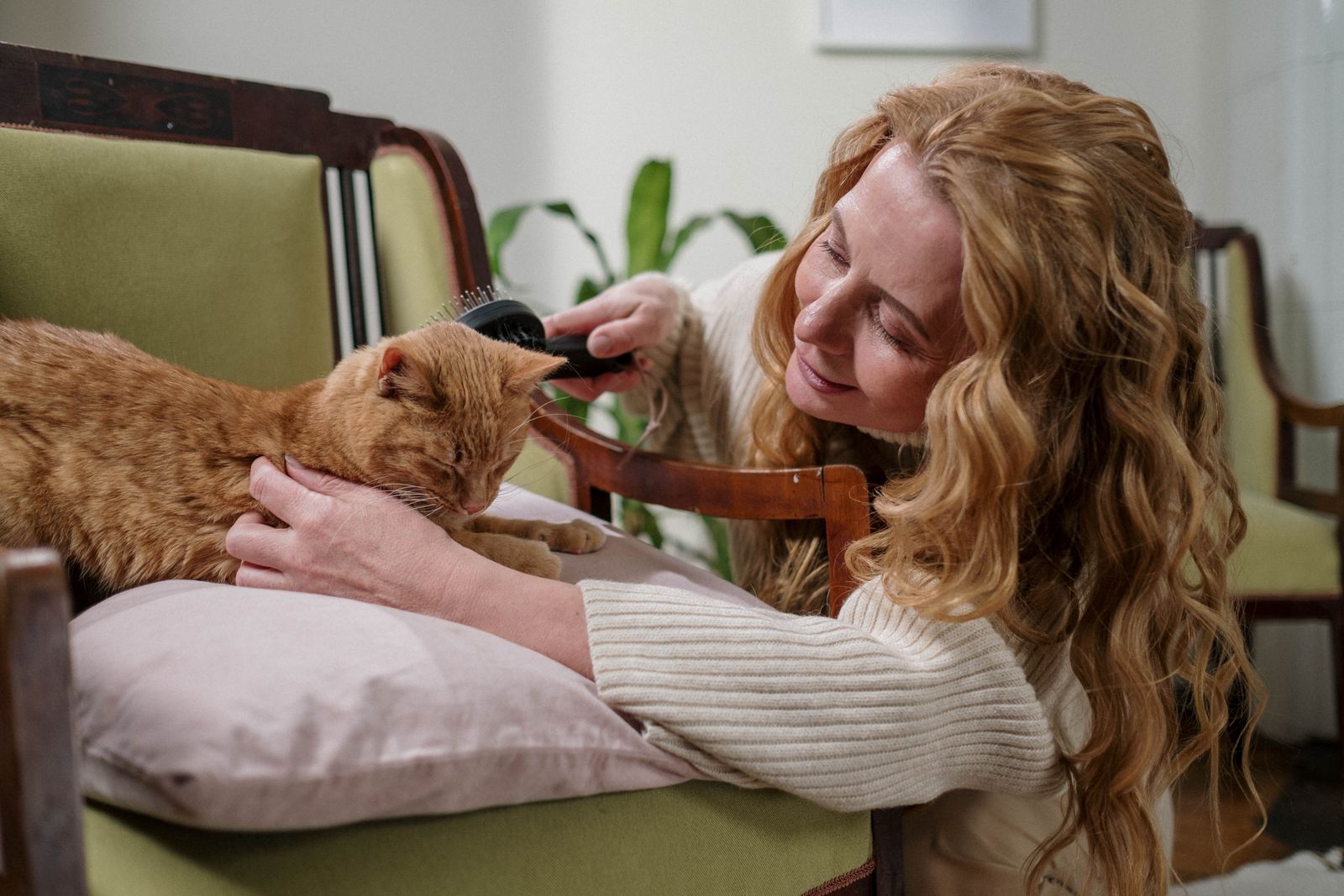
Cats need short sessions and soft tools. A cat that dislikes grooming will not get more tolerant with practice if the practice is unpleasant. Two minutes, a soft self-cleaning slicker, and stopping while the cat is still relaxed will get you further in a month than one long fight.
Mats do not get brushed out. A tight mat close to the skin is a clipping job. Pulling at it hurts, and the skin under a mat is often already inflamed. Cats in particular get shaved for mats far more often than anyone would like, and the reason is usually months of a brush that was not reaching the undercoat.
The picks
from $55.50
Price checked Jul 2, 2026
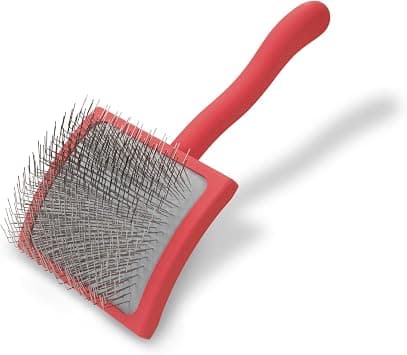
Chris Christensen Big G Slicker Brush
The brush professional groomers own, and the one product here where the price gap buys something real. The pins are long enough and dense enough to reach the skin through a doodle coat, which is the entire problem with cheaper slickers, and it cuts the time on a full brush-out substantially.
We may earn a commission on this link. It never changes the ranking.
- Type
- Slicker brush
- Pins
- Long, dense pin field
- Coats
- Curly, cottony, dense
- Sizes
- Three sizes
What works
- Reaches the skin through coats that defeat supermarket slickers
- Cuts brushing time enough to change whether it gets done at all
- Built to survive years of daily professional use
- Fluffs and finishes as well as it detangles
What to know
- Costs several times what a pet-shop slicker does
- Overkill for a short-coated dog
- Long pins demand a light hand, because pressure on skin is uncomfortable
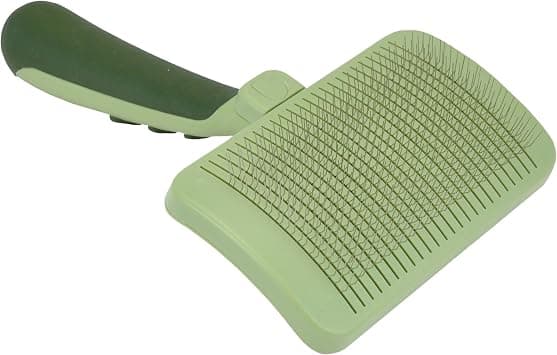
Safari by Coastal Self-Cleaning Slicker Brush for Dogs
The sensible everyday brush. Press the button and the pin bed retracts, taking the collected hair with it, which sounds like a gimmick until you have emptied a normal slicker by hand fifty times. Stainless pins with rounded tips make it comfortable enough for regular use.
We may earn a commission on this link. It never changes the ranking.
- Type
- Self-cleaning slicker
- Pins
- Stainless steel, rounded tips
- Coats
- Medium to long, some undercoat
- Cleaning
- Retracting pin bed
What works
- Self-cleaning mechanism removes the friction that stops people brushing daily
- Rounded pin tips are gentler than most budget slickers
- Inexpensive and widely stocked
- Handles mats at the tidy end of the spectrum
What to know
- Not dense enough for a heavy doodle coat
- Retracting mechanism is a moving part and eventually a failure point
- Too firm for most cats
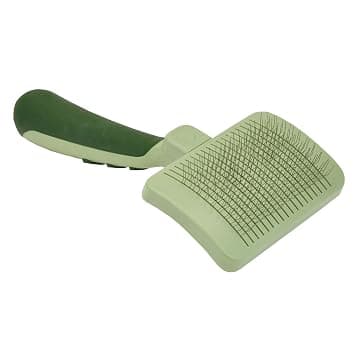
Safari Cat Self-Cleaning Slicker Brush
The cat version, and the difference is not just the size. Finer, softer pins and a smaller head make it usable on a cat that objects to the dog brush, and the self-cleaning bed matters more here because cat sessions are short and stopping to pick hair out of a brush ends them.
We may earn a commission on this link. It never changes the ranking.
- Type
- Self-cleaning slicker, cat size
- Pins
- Fine, soft-tipped
- Coats
- Short and long-haired cats
- Cleaning
- Retracting pin bed
What works
- Sized and sprung for cats rather than a scaled-down dog brush
- Fast to clear between passes, which keeps short sessions short
- Reaches loose undercoat in long-haired cats
- Cheap enough to keep one in each room the cat settles in
What to know
- Not strong enough for a badly matted long-haired cat, which is a clipping job
- Pins bend if used with pressure
- Some cats prefer a rubber tool and will never accept a slicker
$13.99
Price checked Jul 2, 2026
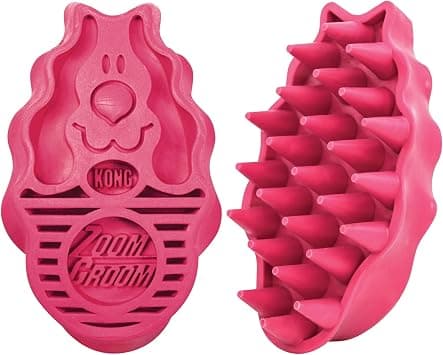
KONG ZoomGroom
Soft rubber fingers, no pins, and the tool most likely to convert an animal that hates grooming. It pulls a startling amount of loose hair off a short-coated dog and doubles as a shampoo brush in the bath. Plenty of cats accept it when they will accept nothing else.
We may earn a commission on this link. It never changes the ranking.
- Type
- Rubber curry brush
- Material
- Soft natural rubber
- Coats
- Short and smooth coats
- Wet use
- Yes, works with shampoo
What works
- Comfortable enough that most animals actively enjoy it
- Works wet, so it earns its place at bath time too
- Nothing to break, and it rinses clean under a tap
- Very cheap for how often it gets used
What to know
- Does almost nothing on a dense undercoat
- Rubber grips hair, so it needs rinsing mid-session on a heavy shedder
- No use at all on a curly coat
from $7.99
Price checked Jul 2, 2026
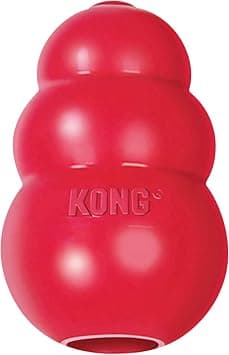
KONG Classic, as a grooming distraction
Not a brush, and the most useful thing on this list for a difficult groomer. A frozen stuffed rubber toy keeps a dog occupied for the length of a full brush-out, and pairing the brush with something good is how grooming stops being a fight in the long run.
We may earn a commission on this link. It never changes the ranking.
- Type
- Food-dispensing rubber toy
- Use here
- Distraction during grooming
- Preparation
- Stuff and freeze in advance
- Material
- Natural rubber, dishwasher safe
What works
- Turns a struggle into a routine the dog looks forward to
- Freezing extends the working time to cover a full session
- Costs less than replacing a brush the dog broke
What to know
- Adds calories, so take them off the daily food
- Needs preparing in advance, which is easy to forget
- Does not work for dogs that are anxious rather than bored
How they compare
| Tool | Coat type | Species | Skip it if |
|---|---|---|---|
| Chris Christensen Big G | Curly, cottony, dense | Dog | Your dog is short-coated |
| Safari Self-Cleaning Slicker | Medium to long | Dog | You need to reach a doodle undercoat |
| Safari Cat Self-Cleaning Slicker | Cat, short or long | Cat | The cat is already matted |
| KONG ZoomGroom | Short and smooth | Dog and cat | The coat has a dense undercoat |
| KONG Classic | Any | Dog | The dog is anxious rather than restless |
Who each one is wrong for
The professional slicker is wrong for a smooth-coated dog. There is nothing for those pins to do on a boxer, and the money would be better spent on a rubber curry and a decent pair of nail clippers.
The rubber curry is wrong as the only tool for a husky, a german shepherd or any other double coat in April. It will pull the loose surface hair and leave the packed undercoat exactly where it is, and the dog will keep shedding while you conclude the brush is broken.
The cat slicker is wrong for a cat that has already matted badly. Mats close to the skin need clipping by a groomer or a vet, sometimes under sedation, and brushing at them is painful enough to lose the cat's trust for a long time.
Making the routine stick
Short and frequent beats long and occasional, for both species. Five minutes daily on a double coat during a shed keeps ahead of it. Twenty minutes once a fortnight does not, and it is also the session in which the animal learns that grooming is something to avoid.
Work in sections rather than sweeping the whole animal. Start where the animal likes being touched, which for most dogs is the chest or shoulder and almost never the feet or the tail. Finish before the animal asks you to. If you are always the one who stops first, the next session starts from a better place.
Line brushing is the technique that separates people whose doodles are matted from people whose doodles are not. Part the coat with one hand, brush the exposed line from the skin outward, then move the part up a centimetre and repeat. It is slower than sweeping the surface and it is the only method that actually reaches the base of the coat.
Questions people actually ask
How often should a dog be brushed?
Daily during a seasonal shed for a double coat, and daily year-round for a curly coat that mats. Short smooth coats are fine with once or twice a week. The right frequency is whatever keeps you ahead of matting.
Do cats need brushing at all?
Short-haired cats manage on their own until age, weight or arthritis makes it hard to reach. Long-haired cats need help throughout their lives, because the coat mats faster than a cat can groom it.
Should I shave my double-coated dog in summer?
No. The topcoat insulates against heat as well as cold and protects skin from sun. Shaving it can permanently change how the coat regrows. Remove the undercoat instead, which is what actually traps heat.
Are deshedding blades safe?
Used gently and occasionally, yes. Used hard and often they cut guard hairs and thin the topcoat. Treat them as a seasonal tool rather than a daily brush.
What do I do about a mat?
If you can slide a comb under it easily, work it apart from the outer edge inward with your fingers and a dematting tool. If it is tight against the skin, book a groomer or a vet. The skin under a mat is frequently sore or infected.
Sources
- Cornell Riney Canine Health Center on skin and coat care
- Cornell Feline Health Center on grooming and cats that stop grooming themselves
- AAFP and ISFM guidelines on handling cats to reduce stress
- Chris Christensen Big G Slicker Brushes
- Safari by Coastal Self-Cleaning Slicker Brush for dogs
- Safari Cat Self-Cleaning Slicker Brush
- KONG ZoomGroom
- KONG Classic
As an Amazon Associate we earn from qualifying purchases. We earn a commission on some links, at no extra cost to you. It never changes which products we recommend or the order they appear in. Full disclosure

Who wrote this
Marin Okafor
Editor, dog gear and nutrition labels
Marin Okafor edits PetGearSearch and writes the dog side of it: food, beds, crates, carriers, grooming tools, and the pet insurance policies that pay for the rest. The ingredient panel and the AAFCO statement get read before a single review does, because that back-of-bag paragraph is where two apparently identical foods stop being identical.
The standard
How this guide was built
- The full product specification, ingredient panel or material spec, read end to end rather than summarised from a retail listing.
- The veterinary and regulatory guidance that applies to the category, cited by name and linked — AAFCO nutrient profiles, WSAVA manufacturer guidelines, the VOHC accepted-product list.
- Aggregated owner reviews at volume across retailers, read for the pattern rather than the anecdote, with deliberate attention to the one-star reports where the failure modes live.
- Every price checked against the live listing on the date printed beside it.