Dental Chews and the VOHC List: Which Claims Are Actually Backed
One seal in pet oral care is awarded on trial data with a published threshold. Here is the threshold, and what a chew without it has demonstrated.
By Tess Lindqvist, writer, cat products and everyday health
Published May 8, 2026 · 9 min read
- Supplements & Health
In this guide
Periodontal disease is the most common clinical condition in adult dogs and cats, and the pet oral care aisle is priced accordingly. Almost every product in it makes a plaque or tartar claim, and almost none of those claims has been tested against a control.
There is one exception, and it is the only thing in this category worth using as a filter. The Veterinary Oral Health Council maintains a list of accepted products, awarded on submitted trial data against a published numerical threshold. A product on that list has demonstrated something. A product not on it has demonstrated nothing, whatever the packaging says.
What the VOHC seal requires
The council does not run the trials itself. Manufacturers run them to a published protocol and submit the data, and the council reviews it against a fixed standard.
The standard is specific. A product must show at least a 15 percent reduction in plaque or in calculus, measured as the difference in mouth mean scores against a negative control group, in each of two separate trials. The average across the two trials must be at least 20 percent. Each trial must show a statistically significant difference at p below 0.05. A minimum of two trials is required for every product.
Two features of that standard are worth sitting with.
The claims are separate. A product is accepted for plaque control, for calculus control, or for both, and the list records which. Plaque is the soft bacterial film, and it is the one that actually drives gum disease. Calculus is mineralised plaque, and controlling it is more cosmetic than clinical. A chew accepted for tartar only has not shown the more useful of the two effects, and the list will tell you that if you read the claim column rather than just checking for the logo.
Twenty percent is a floor, not a triumph. It is a real, measured, controlled effect and it is also a modest one. A chew that reduces plaque by a fifth relative to no chew is doing something worth doing, and it is not doing what brushing does. Reading the seal as "this replaces dental care" is the single commonest misreading.
What the list covers
The accepted-products lists are organised by species and then by product type. For dogs that means dental diets, rawhide chews, edible chew treats, water additives, gels, sprays and toothpastes, toothbrushes and wipes, and professional sealants. For cats it means dental diets, water additives and topical products, toothbrushes and wipes, and edible treats.
Each entry records the company, whether the product is veterinary-only or sold to consumers, which claim it holds, and the year the seal was awarded. The lists are worth consulting directly rather than trusting a logo on a box, because seals get used loosely and formulations change.
Why dry food does not clean teeth
This claim is repeated so often it has become folk knowledge, and it is close to backwards for ordinary kibble.
Standard kibble is designed to shatter on first contact with a tooth. The tooth passes straight through and the fragments scatter, which means the mechanical scraping people imagine is happening does not happen. Even if it did, the crown tip is not where the disease is. Periodontal disease starts at the gumline, and nothing in a bowl of ordinary kibble reaches there.
Specific dental diets are a different product. They use a larger kibble with a fibre matrix aligned so that the tooth sinks into the piece rather than shattering it, which does produce a wiping action along the tooth surface. Some also carry a coating that binds salivary calcium to reduce calculus formation. Several of those diets hold VOHC acceptance, and they earned it on trial data, which is exactly the distinction being drawn here. If your vet has recommended a dental diet, that is a real intervention. It is not the same claim as "dry food cleans teeth", which is a claim ordinary dry food cannot support.
What actually works, in order
Brushing, daily. Nothing else is close. Daily brushing with a pet toothpaste is the reference standard against which every other home measure is compared, and every other measure is worse. Brushing every other day is much better than nothing. Weekly is close to nothing.
Human toothpaste must not be used, because it is not meant to be swallowed and some formulations contain xylitol, which is severely toxic to dogs. Use a pet toothpaste in a flavour the animal likes, chosen from the toothpastes that hold a VOHC acceptance and the ones worth buying anyway, and build the habit slowly over weeks rather than forcing it in one session.
Professional cleaning under anaesthesia, when your vet says so. Below the gumline is where disease lives, and it cannot be reached in a conscious animal. Anaesthesia-free dental cleaning is cosmetic scaling of the visible crown. It leaves the subgingival disease untouched, and it leaves the owner believing the problem has been handled, which is the part that does the harm.
VOHC-accepted chews, diets and additives. A genuine adjunct with a measured effect. Best understood as the thing you do in addition to brushing, or the thing you do for the animal that will not tolerate a brush.
Everything else. Unaccepted chews, water additives without trial data, and dental sprays sold on before-and-after photographs. Some may work. None has shown it.
Choosing a chew, once you have the list
Match the size to the dog and read the calories. A dental chew is food. A large one can run 70 to 120 kcal, which is a serious fraction of a small dog's daily allowance, and dental chews are a common reason a dog on a measured diet still gains weight. Subtract them from meals rather than adding them on top, which is the arithmetic most households skip. For dogs specifically, we have costed the accepted chews against each other in a buying guide that prices each one per day and per calorie.
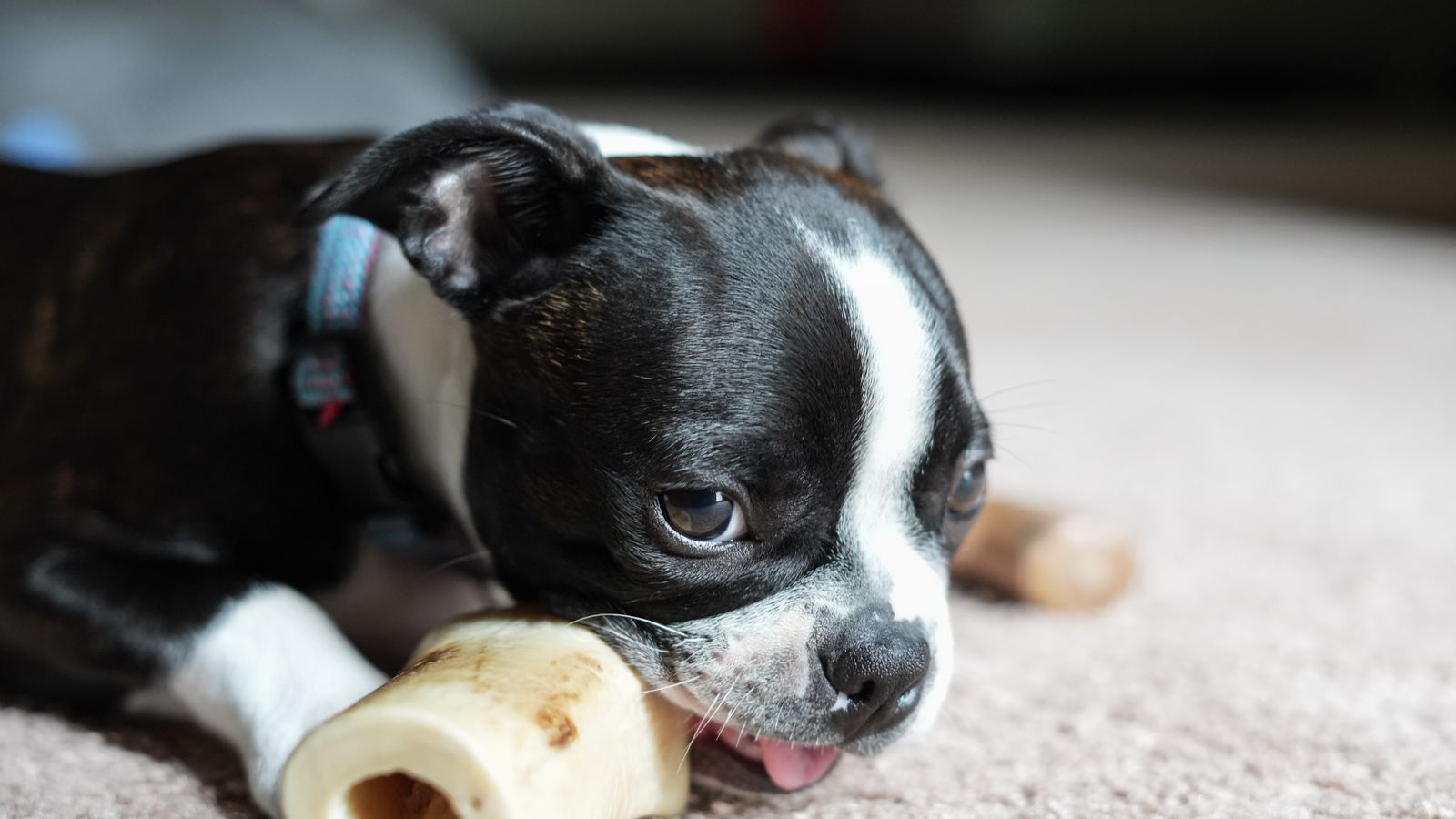
Match the hardness to the chewer. The thumbnail test is the practical rule: if you cannot dent the surface with a thumbnail, it is hard enough to fracture a tooth. Antlers, bones, hooves and hard nylon products are a common cause of slab fractures of the upper carnassial, and that is a costly, painful and entirely avoidable injury.
Supervise, and take the end away. Most chew-related emergencies are swallowed final pieces rather than the chewing itself.
Do not assume cats will use one. The feline accepted list is much shorter than the canine one, and cats are less inclined to chew anything for long enough to matter. For most cats the effective interventions are brushing, a VOHC-accepted dental diet, and professional cleaning.
The honest summary
The VOHC list is the only efficacy claim in pet oral care with a published threshold behind it, and the threshold is 15 percent in each of two trials with a 20 percent average, against a control, at statistical significance. That is a real effect and a modest one.
Use the list to filter. Prefer products holding the plaque claim over ones holding only the calculus claim. Then treat whatever you buy as an adjunct to brushing rather than a replacement for it, because the gap between a chew and a toothbrush is much larger than the gap between one chew and another. If you buy one thing after reading this, buy a toothbrush, and check that anything else you add carries a seal that means something.
Questions people actually ask
Do dental chews replace brushing?
No. Daily brushing is the reference standard and VOHC-accepted chews are an adjunct with a measured but modest effect. The right framing is brushing plus a chew, or a chew for the animal that will not tolerate a brush at all.
How do I check whether a product is VOHC accepted?
Consult the council's accepted-products lists directly rather than trusting a logo on the packaging. Check the claim column too: acceptance for calculus control is a weaker finding than acceptance for plaque control.
Are antlers and bones good for teeth?
They are a common cause of fractured teeth. Use the thumbnail test: if you cannot dent it with a thumbnail, it is hard enough to break a tooth, and the upper carnassial is the usual casualty. That fracture needs extraction or a root canal.
Is anaesthesia-free dental cleaning worth doing?
It scales the visible crown and leaves the disease below the gumline untouched, which is where periodontal disease actually is. The worse consequence is that it convinces the owner the problem is handled. Veterinary professional bodies advise against it.
Do water additives work?
Some hold VOHC acceptance and have trial data behind them. Most do not. If you want to use one, pick from the accepted list, and treat it as the weakest of the adjuncts rather than as a brushing substitute.
Sources
As an Amazon Associate we earn from qualifying purchases. We earn a commission on some links, at no extra cost to you. It never changes which products we recommend or the order they appear in. Full disclosure

Who wrote this
Tess Lindqvist
Writer, cat products and everyday health
Tess Lindqvist writes the cat side of PetGearSearch, plus the health-adjacent categories where a label makes a claim the evidence has to back. The question asked of every product is the one owners actually ask at 3am: will the animal use it, and does it do the thing the box says.
The standard
How this guide was built
- The full product specification, ingredient panel or material spec, read end to end rather than summarised from a retail listing.
- The veterinary and regulatory guidance that applies to the category, cited by name and linked — AAFCO nutrient profiles, WSAVA manufacturer guidelines, the VOHC accepted-product list.
- Aggregated owner reviews at volume across retailers, read for the pattern rather than the anecdote, with deliberate attention to the one-star reports where the failure modes live.
- Every price checked against the live listing on the date printed beside it.