Best Cat Carriers
Five carriers judged on the two things that decide the day: whether it opens from the top, and whether anyone has crash-tested it.
By Marin Okafor, editor, dog gear and nutrition labels
Published Aug 18, 2026 · 11 min read
- Crates & Carriers
- 5 products compared
In this guide
Two features separate a carrier that makes a vet trip manageable from one that makes it a wrestling match, and neither of them appears prominently on any product page.
The first is whether it opens from the top. Pushing a frightened cat through a small front opening is the hardest possible version of the task, and lowering the same cat into an open box is close to trivial. A carrier whose top comes off entirely goes further: the cat can be examined sitting in the base, which many vets prefer for a frightened animal, and which removes the second-worst moment of the visit.
The second is whether anyone independent has crash-tested it. There is no mandatory safety standard for pet travel products in the United States, and the phrase crash tested on a box carries no defined meaning. The Center for Pet Safety, an independent non-profit, publishes crash-test research across harnesses, carriers, crates and pet travel seats, and runs a certification programme. Very few carriers have been through it.
That second filter is why three of the five below are Sleepypod. It is not a preference for the brand. It is that Sleepypod publishes CPS certification with a stated weight rating and names the standards it tested against, and almost nobody else in this category does. Where safety is the reason you are buying, the field is genuinely that narrow, and it is more useful to say so than to pad the list.
What decides the purchase
Top access. Non-negotiable for a cat that objects. A removable lid beats a top-opening door, which beats a front door alone by a wide margin.
Structure. Hard or semi-rigid holds its shape, sits stably in a car and cannot collapse around the animal. Soft-sided is lighter and fits under an aircraft seat, and it is a compromise everywhere else.
Size, and not more. The same rule that governs sizing a dog crate applies here. The cat should be able to stand, turn around and lie down. Larger than that is worse, because a cat slides around in a big carrier on a journey, and a frightened cat wants a snug space rather than a room.
How it secures in a car. A designated seatbelt path, with instructions, is the difference between a restraint and unrestrained cargo. The crash-test findings on this category are worth reading before you decide how much this matters to you.
Whether the cat will get into it. The best carrier in the world is useless if the cat is under the bed. Hardware is maybe a quarter of this problem and training is the rest.
The picks
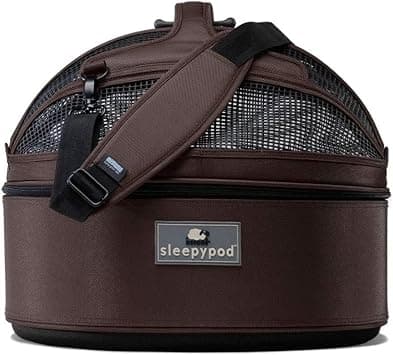
$224.99
Price checked Aug 18, 2026
Sleepypod Mobile Pet Bed
The one to buy, and the reason is the design rather than the safety rating. It is a round padded bed that lives in the house as a bed, and becomes a carrier when you zip a mesh dome onto it. The cat is not being put into a carrier, it is being carried in the thing it already sleeps in, which sidesteps the entire association problem. On top of that it is certified by the Center for Pet Safety with a five-star rating for pets up to 15lb, and the manufacturer states testing to US, Canadian and EU child car seat standards.
We may earn a commission on this link. It never changes the ranking.
- Format
- Bed plus zip-on mesh dome
- Certification
- CPS certified, five-star rating to 15lb
- Standards claimed
- US, Canadian and EU child car seat standards
- Dimensions
- 17in diameter, 13.5in tall, 4.5lb empty
What works
- Doubles as an everyday bed, which removes the carrier association entirely
- Independently crash-test certified with a published weight rating
- Loads from the top with the dome unzipped
- Manufacturer runs a crash replacement programme
What to know
- Expensive for a carrier
- Rated to 15lb, so it is wrong for a large cat
- Round footprint takes more room in a car than a rectangular carrier
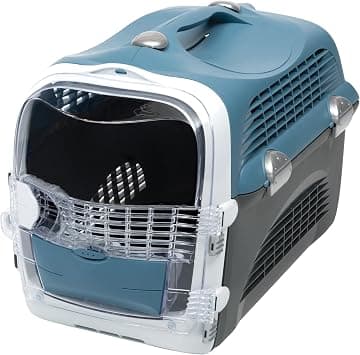
Catit Cabrio Carrier
The sensible default for most households. Hard-sided with 360 degree access, so it opens from the top as well as the front and side, and the single-hand locking mechanism means you are not fighting a latch while holding a cat. It also has a front feeding door with slide-out bowls, which matters more than it sounds for a long journey or an overnight stay. Roomy at 20 by 13 by 13.75 inches, with generous ventilation, and it costs a fraction of the crash-tested options.
We may earn a commission on this link. It never changes the ranking.
- Format
- Hard-sided, 360 degree access
- Dimensions
- 20in L x 13in W x 13.75in H
- Access
- Top, front and side, single-hand locking
- Extras
- Feeding door with slide-out bowls
What works
- Top access, which is the single most useful feature in a cat carrier
- Hard shell holds its shape and sits stably
- Single-hand locking, so you are not wrestling a latch one-handed
- Widely available at a normal price
What to know
- No independent crash-test certification published
- Bulkier to store than a soft carrier
- Plastic latches are the part most likely to wear out over years
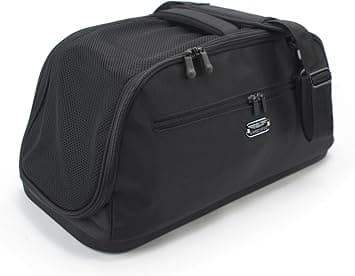
$214.99
Price checked Aug 18, 2026
Sleepypod Air
Built for the under-seat problem specifically. The Air compresses at the ends to fit the size limits airlines impose, without permanently being that small, so the cat gets a full-length space in the terminal and a compliant footprint in the aircraft. Same crash-test lineage as the rest of the range for the car legs of the journey. Confirm dimensions against your specific airline before flying, because carriers vary by aircraft and the rules change.
We may earn a commission on this link. It never changes the ranking.
- Format
- Semi-rigid soft carrier
- Purpose
- Airline in-cabin, compresses to fit under-seat limits
- Car use
- Secures with the vehicle belt
- Access
- Top and side openings
What works
- Compresses to meet under-seat size limits without being permanently cramped
- Crash-test lineage for the car portion of a journey
- Top opening as well as side
- Well made, with a long service life reported by owners
What to know
- Expensive, and only worth it if you actually fly
- Airline size limits vary by carrier and aircraft, so confirm before you buy
- Soft structure is less stable than a hard shell for routine vet trips
$199.99
Price checked Aug 18, 2026
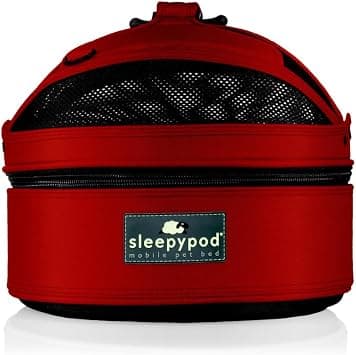
Sleepypod Mini
The same bed-plus-dome concept in a smaller footprint, for a cat that would rattle around in the full size. Worth choosing deliberately rather than by default: a carrier should be snug, and a small cat in an oversized carrier slides during a journey, which is both frightening and, in a hard stop, a genuine hazard. Fits into a car footwell more easily than the full-size version, which is where a carrier is most stable.
We may earn a commission on this link. It never changes the ranking.
- Format
- Bed plus zip-on mesh dome, reduced footprint
- Best for
- Small cats, kittens and small dogs
- Car use
- Secures with the vehicle belt
- Access
- Top, with the dome unzipped
What works
- Correctly sized for a small cat rather than oversized
- Same bed-at-home approach that defuses the carrier association
- Fits a footwell, which is the most stable place in a car
- Top loading
What to know
- Outgrown by a kitten that becomes a large cat
- Expensive for a carrier a cat may only need for a year or two
- Check the weight rating against the animal rather than assuming
$189.00
Price checked Aug 18, 2026
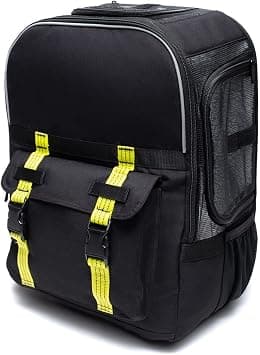
Roverlund Ready-for-Adventure Pet Backpack
For the households where the journey is on foot rather than by car. A backpack keeps the cat against your body, which most cats find steadier than a swinging hand-carried box, and it leaves both hands free on public transport or a walk to a clinic. Rated up to 25lb, which covers any cat and a small dog. It is not a car restraint and should not be treated as one, and it is not the carrier for a cat that has not been trained to it.
We may earn a commission on this link. It never changes the ranking.
- Format
- Soft backpack carrier
- Capacity
- Rated up to 25lb
- Use case
- Walking, public transport, travel on foot
- Access
- Top and side entry
What works
- Hands free, which matters on public transport and stairs
- Held against the body, which most cats find steadier than a swinging carrier
- Rated to 25lb, so it covers large cats and small dogs
- Comfortable to carry over distance in a way a hand carrier is not
What to know
- Not a car restraint and no published crash-test results
- Needs a cat that is already comfortable with confinement
- Soft structure gives less protection than a hard shell
How they compare
| Carrier | Type | Top access | Crash tested | Price |
|---|---|---|---|---|
| Sleepypod Mobile Pet Bed | Bed plus dome | Yes | CPS certified to 15lb | $224.99 |
| Catit Cabrio | Hard-sided | Yes, 360 degree | Not published | Check listing |
| Sleepypod Air | Semi-rigid soft | Yes | Crash-tested range | $214.99 |
| Sleepypod Mini | Bed plus dome, small | Yes | Crash-tested range | $199.99 |
| Roverlund Backpack | Soft backpack | Yes | Not published | $189.00 |
Who each one is wrong for
The Sleepypod range is wrong for a large cat. The Mobile Pet Bed is rated to 15lb, and a rating is a tested limit rather than a suggestion. A 16lb cat needs the Catit or something else with the room for it.
The backpack is wrong for the car, wrong for a cat that panics in confined spaces, and wrong for a long journey where the animal needs to lie stretched out. It is a specific tool for travel on foot.
The Air is wrong unless you fly. It is a premium price for a feature, under-seat compression, that has no value on a trip to the vet.
Every carrier here is wrong for two cats at once. Even bonded cats can redirect fear onto each other in a confined space under stress, and a shared carrier makes handling harder at the clinic. One carrier per cat, placed where they can see each other.
And all of them are wrong if the cat will not get into one. That is not a hardware problem.
The thing that matters more than any of these
Leave the carrier out permanently, with the cat's own bedding in it, in a room the household uses. Feed the cat in it. Let a wand toy land in it. Take it out in the car sometimes and come home again without going anywhere.
A cat that has learned the carrier predicts nothing in particular is a completely different animal on vet day from one that has learned it predicts a needle. That is worth more than any feature on this page, it costs nothing, and it takes a few weeks of doing very little. The full sequence is here, and the bed-style carriers are on this list precisely because they make it easier.
Questions people actually ask
What is the most important feature in a cat carrier?
Top access. Lowering a cat into an open carrier is vastly easier than pushing one through a front opening, and a removable top also lets the vet examine the cat in the base rather than dragging it out. Everything else is secondary.
Are crash-tested cat carriers worth the money?
If the cat travels by car regularly, yes. There is no mandatory standard in this category, independent testing has found widespread failures, and an unrestrained carrier is a projectile. If the cat makes one short trip a year, a good hard-sided carrier properly belted in is a reasonable compromise.
Hard-sided or soft-sided?
Hard for vet visits, because it holds its shape, opens from the top and sits stably. Soft for air travel under a seat, and for cats already relaxed about the whole business. Semi-rigid designs split the difference.
What size carrier does my cat need?
Big enough to stand, turn around and lie down, and no bigger. An oversized carrier lets a cat slide during a journey, which is frightening and unsafe. Check the weight rating on any crash-certified product against the actual cat.
Can I put two cats in one carrier?
Generally not. Even bonded cats can redirect fear onto each other in a confined space under stress, and it makes handling harder at the clinic. Use one each and put them side by side so they can see each other.
Sources
- Center for Pet Safety: crash-test research on harnesses, carriers, crates and pet travel seats
- AAFP and ISFM feline environmental needs guidelines
- AAFP practice guidelines
- Cornell Feline Health Center: feline health topics
- Sleepypod Mobile Pet Bed
- Sleepypod Air
- Sleepypod Mini
- Catit Cabrio Carrier
- Roverlund Ready-for-Adventure Pet Backpack
As an Amazon Associate we earn from qualifying purchases. We earn a commission on some links, at no extra cost to you. It never changes which products we recommend or the order they appear in. Full disclosure

Who wrote this
Marin Okafor
Editor, dog gear and nutrition labels
Marin Okafor edits PetGearSearch and writes the dog side of it: food, beds, crates, carriers, grooming tools, and the pet insurance policies that pay for the rest. The ingredient panel and the AAFCO statement get read before a single review does, because that back-of-bag paragraph is where two apparently identical foods stop being identical.
The standard
How this guide was built
- The full product specification, ingredient panel or material spec, read end to end rather than summarised from a retail listing.
- The veterinary and regulatory guidance that applies to the category, cited by name and linked — AAFCO nutrient profiles, WSAVA manufacturer guidelines, the VOHC accepted-product list.
- Aggregated owner reviews at volume across retailers, read for the pattern rather than the anecdote, with deliberate attention to the one-star reports where the failure modes live.
- Every price checked against the live listing on the date printed beside it.